
“That to keep things exactly as they are requires arduous maintenance, like a lawn needs cutting or a body needs feeding. Such ceaseless labour to shore up the world” — Henrietta Rose-Innes, ‘Nineveh’.
The spade is a plainly utilitarian tool with rich associations. In the spade we see labour, development, excavation, burial, and more. In South Africa, it is also a ubiquitous object, present on the mines, the construction site, the graveyard, the suburban yard, and even as a prop for the gilded and silvered performers who work at the robots, or as decorative moderations on mini-bus taxis.
Mostly, though, if you ask someone what it is one does with a spade, they will answer: digging. In South Africa, where so much of our shared history and contemporary reality is in a constant state of exhumation, buried by years of simultaneously extractive and burdensome colonialism, the act of making sense of one’s history and contemporaneity is an act of excavation.
But art is a form of exhumation, too, and a more generative form – the deeper it goes, the more it reveals. It’s constructive, rather than extractive. In his brilliant poem, Digging, the Irish poet, Seamus Heaney likens his pen to a spade, and the creative act of writing to the laboured act of digging. In the poem, the protagonist watches his father from his bedroom window as he toils away in the vegetable garden. “The cold smell of potato mould, the squelch and slap of soggy peat, the curt cuts of an edge, through living roots awaken in my head. But I’ve no spade to follow men like them.” It is the last line that necessitates a vital shift in the mind of the protagonist, at once acknowledging a particular lineage, and making the choice to continue on in this fashion, differently. Writing, art, meaning-making, he argues, is the work he will undertake: “Between my finger and my thumb, the squat pen rests. I’ll dig with it.”In September 2025, the South African artist Smiso Cele received the Cassirer Welz Award. Animating his award-winning body of work is a longstanding interest in the intersections of ecology, geopolitics, and personal history. Central to all of this is his use of the spade.In To Shore Up The World, the spade is bent, broken, and welded back together again to form a distorted, surreal and non-functional version of itself. His sculptures are simple and affecting – black spades that have been extended and warped, placed on wooden bases made to follow their snaking paths. Sometimes, they adorn the walls, hanging as they might in a toolshed, but truncated or elongated, casting odd shapes on the wall. The shape of the common earthworm, an essential character in gardening because of its role in soil fertilisation, is a source of inspiration for the twisting and turning of these spades.
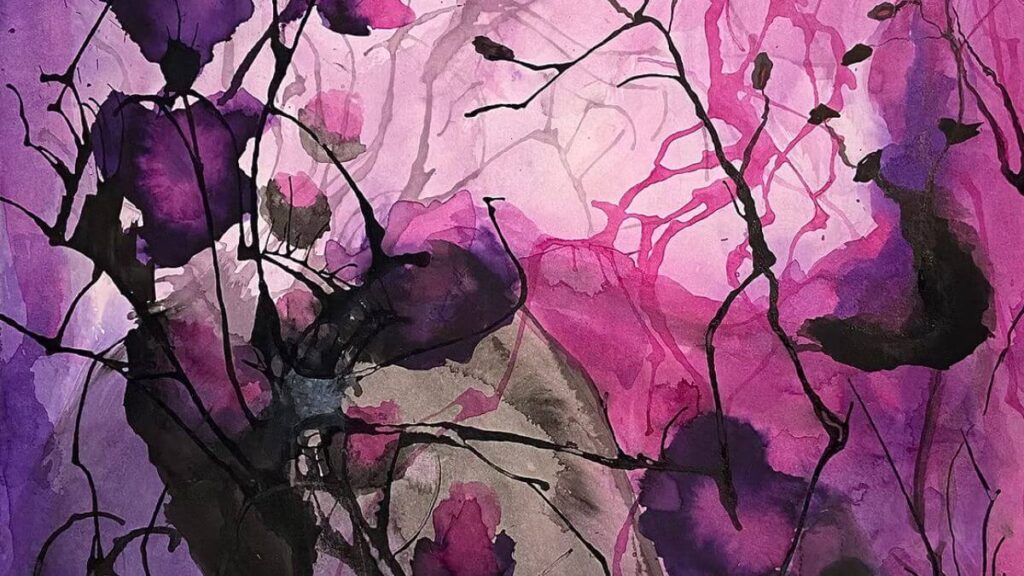
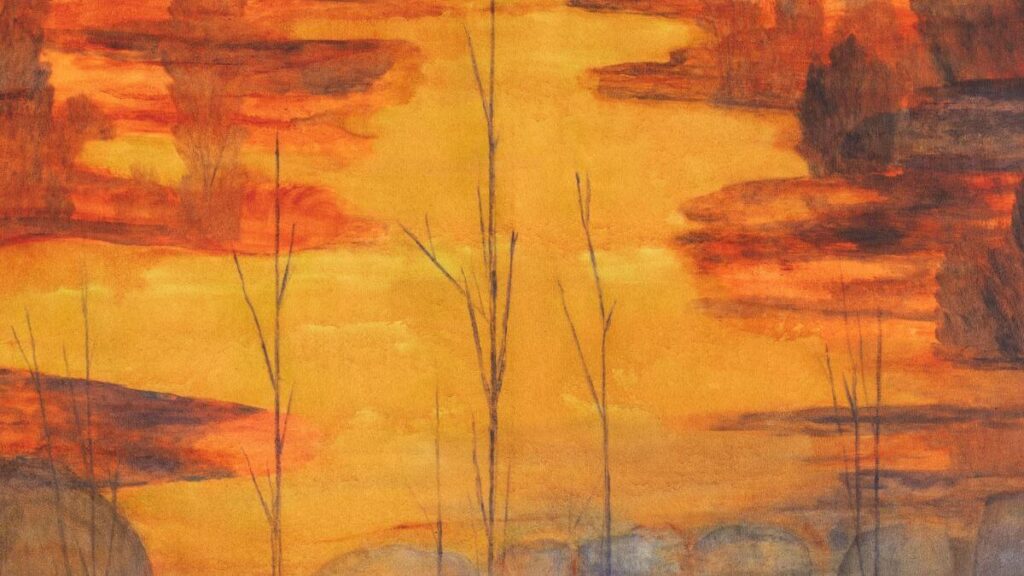
Orbiting and interwoven with these works are Cele’s works on paper. Layered, textured, and engaging, these mixed-media works on handmade paper can be seen as roadmaps or schematics to Cele’s sculptures, but also to the self. Delicate, considered lines cut neat paths through palimpsestic patterns, sharing space with handwritten notes and self-portraits. Exhibited here alongside his sculptures, the prints provide an exploded view of the artist’s research and speculation – a process of simultaneous surfacing and expansion.
For Cele, who grew up in Port Shepstone, KwaZulu-Natal sharing a room with his siblings that also doubled up as a storage room – full of spades and other tools – this body of work is personal, but it also extends to a broader history of labour and place in Johannesburg. The work speaks to his childhood, as well as his father who has worked as a gardener for nearly two decades, while also being concerned with migrant labour and histories of displacement in Johannesburg.
Cele’s interest in migrant labour and its trappings finds resonance in Aime Césaire’s theory of “Thingification”: Colonisation’s trick lies in reducing colonised people into objects and tools of labour in the eyes of the coloniser. As the residents of Sophiatown were removed from their homes and relocated to places like Meadowlands on the outskirts of Johannesburg, they continued to provide essential labour in the city, each one stripped of their humanity, their connection to home, reduced to nothing more than a tool, a spade.
Similarly, Cele is keenly aware of the systems that keep people in this condition. Indeed, the title of this exhibition borrows from the South African author Henrietta Rose-Inne’s reflections on the relentless, manual labour required to maintain a city: “Such ceaseless labour to shore up the world.”
In his manipulation of the spade, Cele presents a collection of dysfunctional objects – tools and objects that refuse to perform their function, and ultimately short-circuit relationships of power and labour. Cele’s work is quietly moving, capable of burrowing into your heart, your head, your history, and leaving behind a generative seed. What better way to do so than with the common spade?