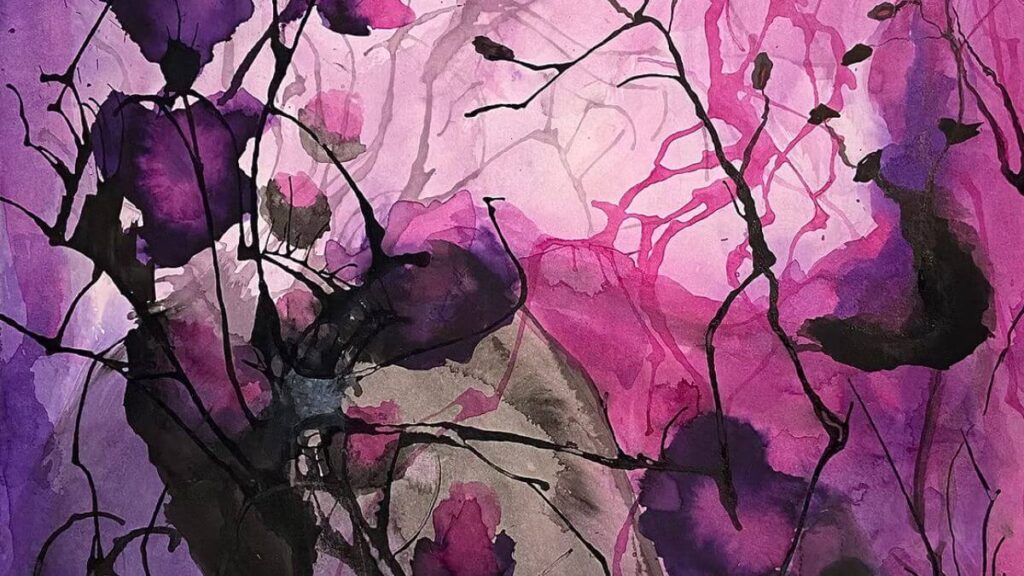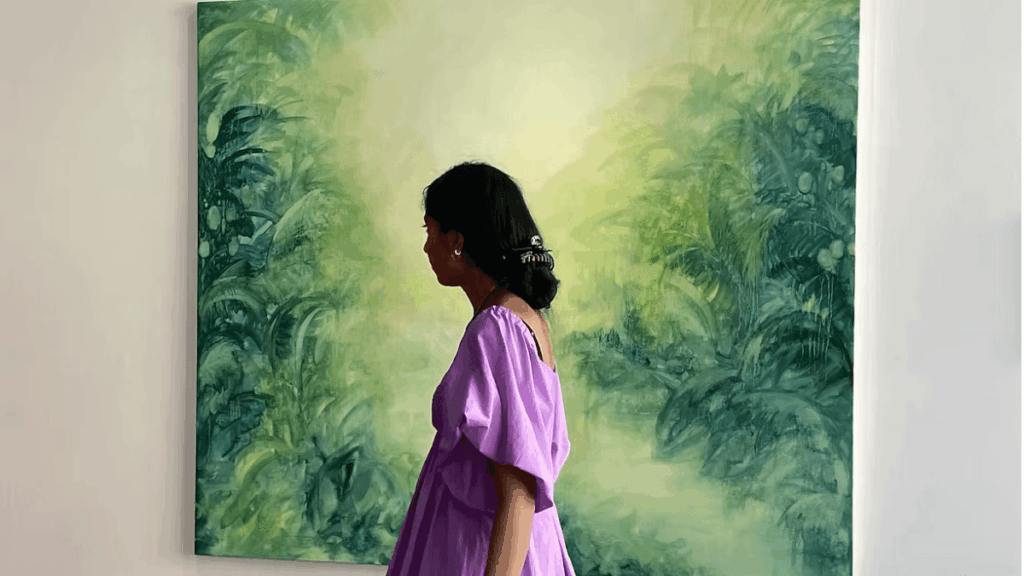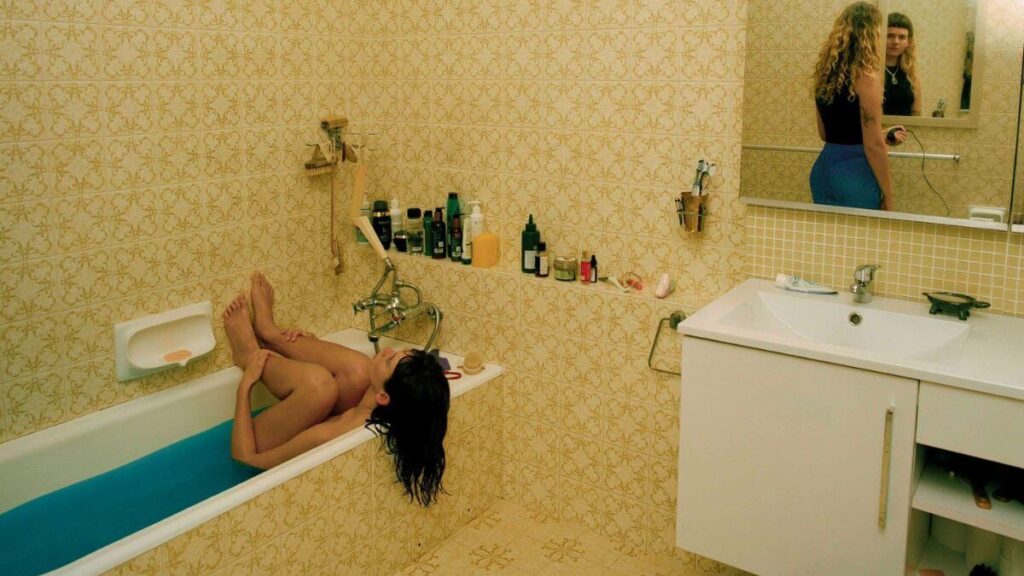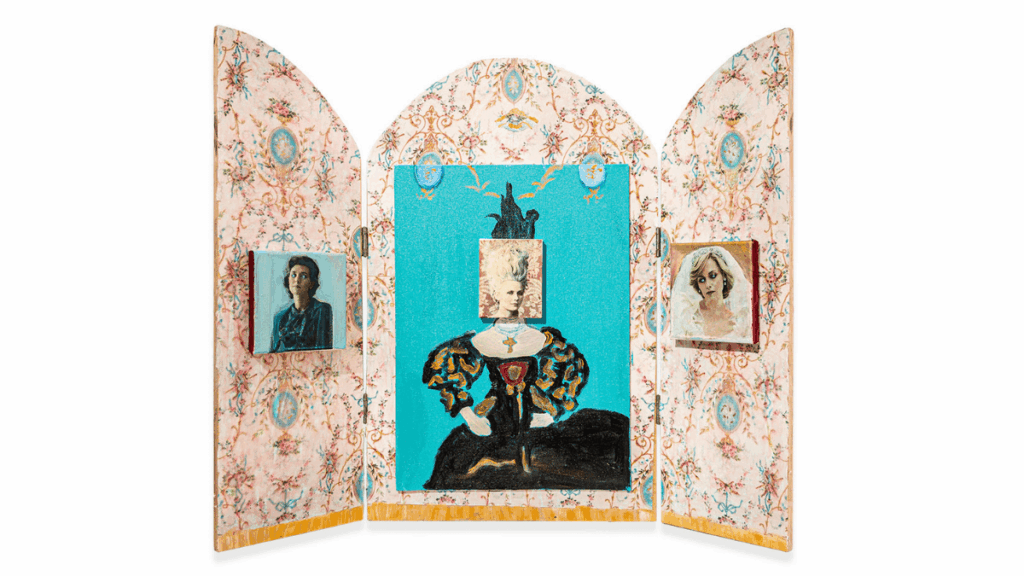
Experience two exhibitions which showcase the Social Impact Art Prize 2022.
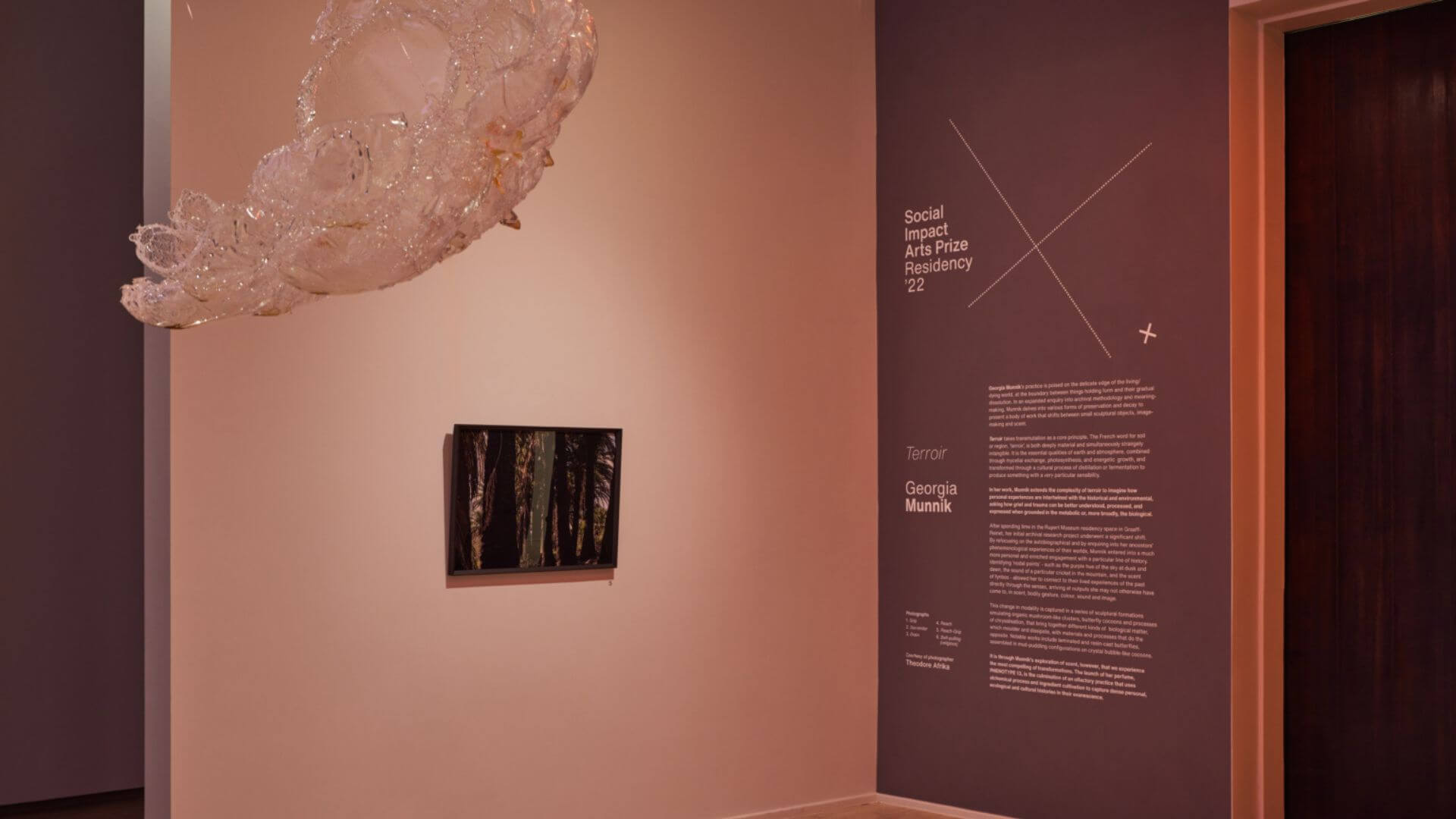
Gallery 4 features ‘Terroir’ by Georgia Munnik, who received the Artist Residency in Graaff-Reinet award. The film project, ‘Kammakamma’, was created in Stellenbosch by Abri de Swardt, who received an Arts Fellowship.
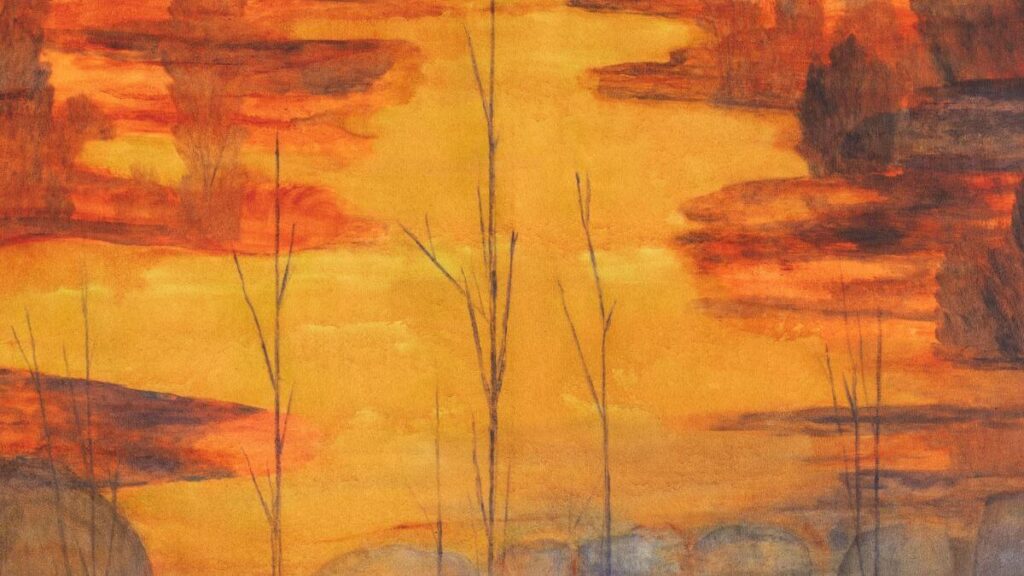
Georgia Munnik’s practice is poised on the delicate edge of the living/dying world, at the boundary between things holding form and their gradual dissolution. In an expanded enquiry into archival methodology and meaning-making, Munnik delves into various forms of preservation and decay to present a body of work that shifts between small sculptural objects, image-making and scent.
Terroir takes transmutation as a core principle. The French word for soil or region, ‘terroir’, is both deeply material and simultaneously strangely intangible. It is the essential qualities of earth and atmosphere, combined through mycelial exchange, photosynthesis, and energetic growth, and transformed through a cultural process of distillation or fermentation to produce something with a very particular sensibility.
In her work, Munnik extends the complexity of terroir to imagine how personal experiences are intertwined with the historical and environmental, asking how grief and trauma can be better understood, processed, and expressed when grounded in the metabolic or, more broadly, the biological.
Social Impact Arts Prize Fellowship ’22
Abri de Swardt is a transdisciplinary artist working primarily with performance, photography and the moving image. His exhibition, Kammakamma, brings together a range of different media and methodologies, including historical research, site-specific engagement, poetic and fictional texts, scriptwriting, videography, sound design and installation. Focussed on the Eerste River, from its many sources in the hills surrounding Stellenbosch, to the sea at Macassar beach, De Swardt asks a critical question: If the river’s mouth could speak, what would it say?
Kammakamma is the second of three films that positions the river as witness to and carrier of multiple submerged narratives. In imagining the river as capable of speech, De Swardt draws into being an understanding of the more-than-human world as neither passive nor inert, but vibrant, animate and agential, and in this instance, polyvocal.
Written in collaboration with poet and novelist Ronelda S. Kamfer, and historian Dr Saarah Jappie, each part of the film is temporally and spatially distinct, situating its protagonists at a point of confluence within the flux and flow of personal, historical and environmental forces. In the opening iteration of Kammakamma we meet Hendrik Biebouw, a wayward teenager who, having attacked a VOC watermill on the Eerste River in 1707 along with three others, is recorded to have infamously protested his fate in the magistrate’s court, proclaiming himself an ‘Africaander’ – a term previously used only for enslaved and indigenous peoples.