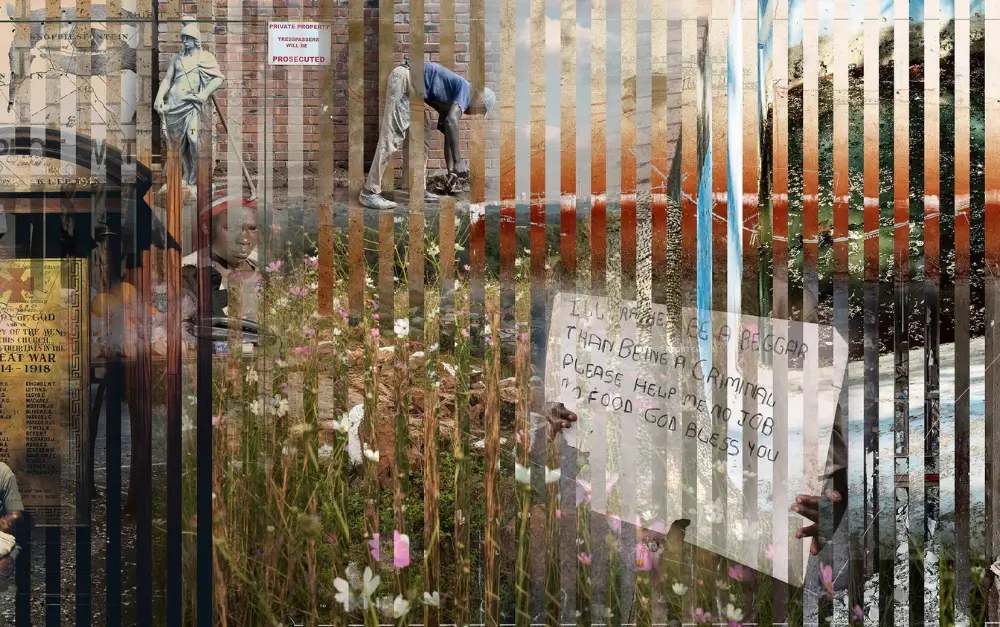
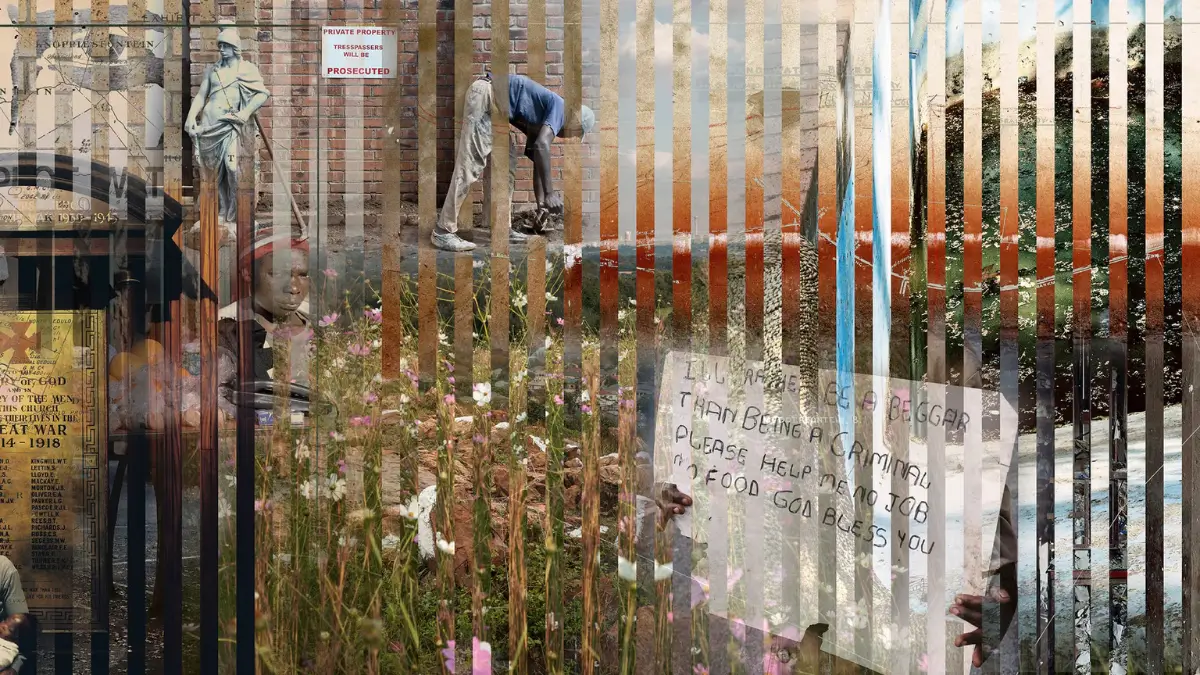
Subotzky has spent much of his career taking images apart and rebuilding them. His Sticky-tape Transfer process, developed over more than a decade, involves lifting pigment from photographs with adhesive tape and reassembling the fragments into layered compositions. That approach becomes a useful way into Johannesburg itself: a city shaped by migration, industry, wealth, displacement and continual reinvention.
The exhibition begins before visitors enter the main gallery. A 1976 Mercedes, built in South Africa in the year of the Soweto uprising, is parked inside the gallery’s bookshop and café. With film fragments playing through the open doors and a Johannesburg-inspired soundtrack, the car introduces Subotzky’s forthcoming film project, 24-Hour Joburg, which follows him driving through the city with different guests over the course of a year.
Inside, one of the first major works is An Idea of Africa (2023–2026), a large painting that turns conventional ideas of map-making on their head. The African continent is inverted and opened up through lines of migration and movement, including the artist’s own family history. Subotzky traces the story of his German-Jewish great-grandfather, who fled Nazi Germany with a thirteen-ton steamroller that could later be sold in Cape Town, eventually helping the family establish itself in Johannesburg. The story gives the exhibition’s alternative title its meaning and becomes a way of thinking about how objects, money, identities and places change as people move through history.
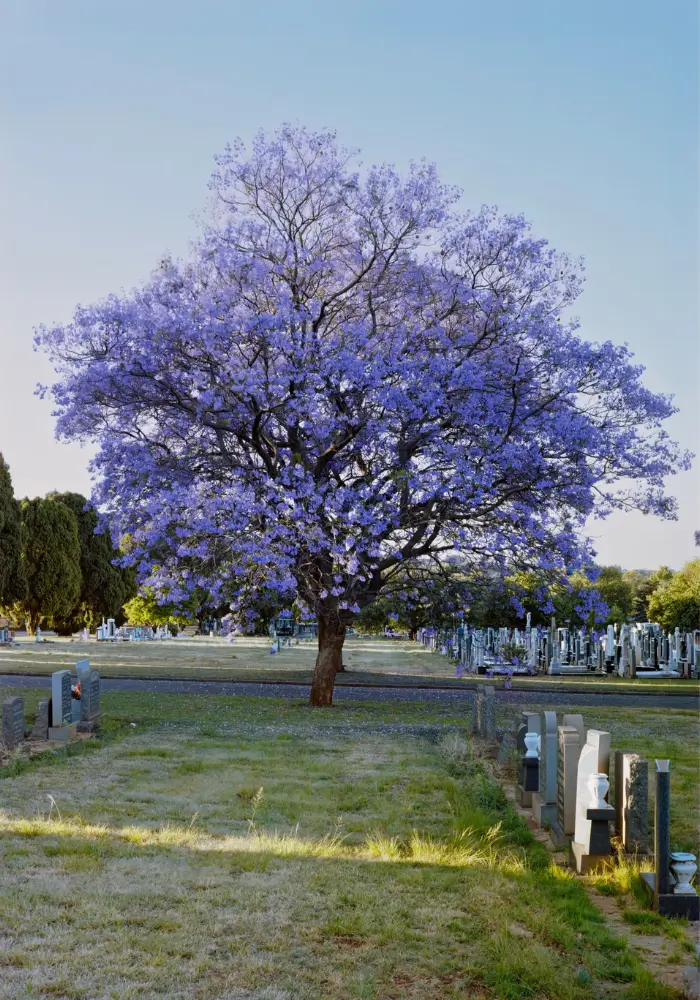
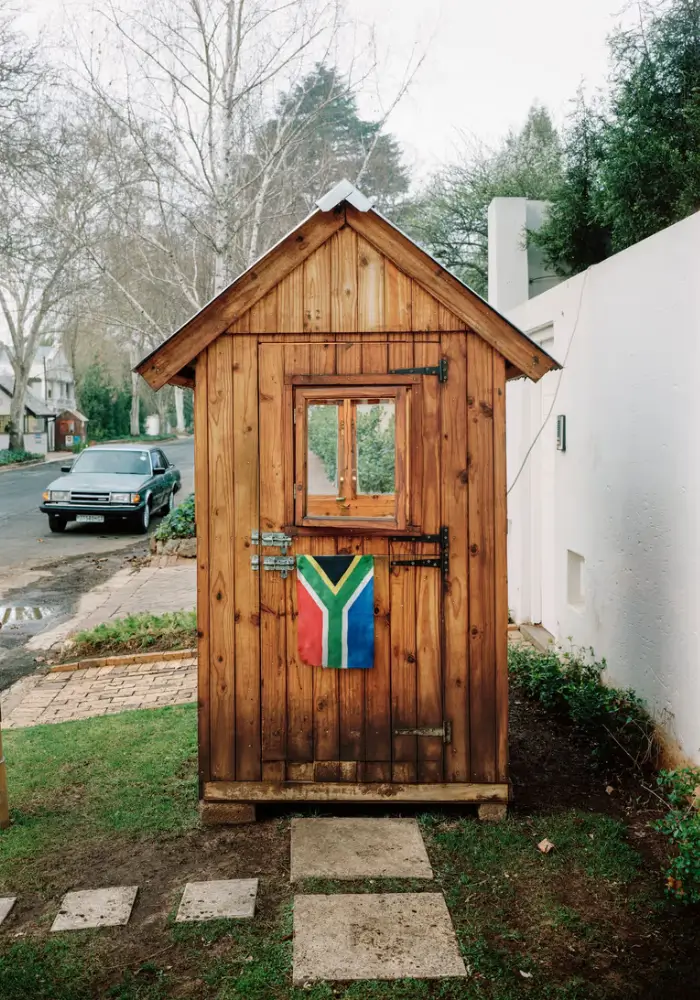
Photographs taken since Subotzky moved to Johannesburg in 2008 continue this portrait of a divided and layered city. Sandton and the CBD appear together from a distance. Security huts, electric fences, new developments, open landscapes and traces of Johannesburg’s mining history sit alongside one another. In another image, an artisanal miner still pans for gold using methods closely linked to those that helped create the city 140 years ago.
At the centre of the exhibition is the 10-panel Sticky-tape Transfer A Johannesburg Landscape. Archival maps, mining imagery, photographs from Ponte City and other parts of Subotzky’s archive are woven together with some of the vegetation that has become part of Johannesburg’s visual identity: jacarandas, bougainvillea, moonflowers and brick walls. The panels do not offer a neat chronology. Instead, they feel closer to moving through the city and catching different histories, landscapes and viewpoints in passing.
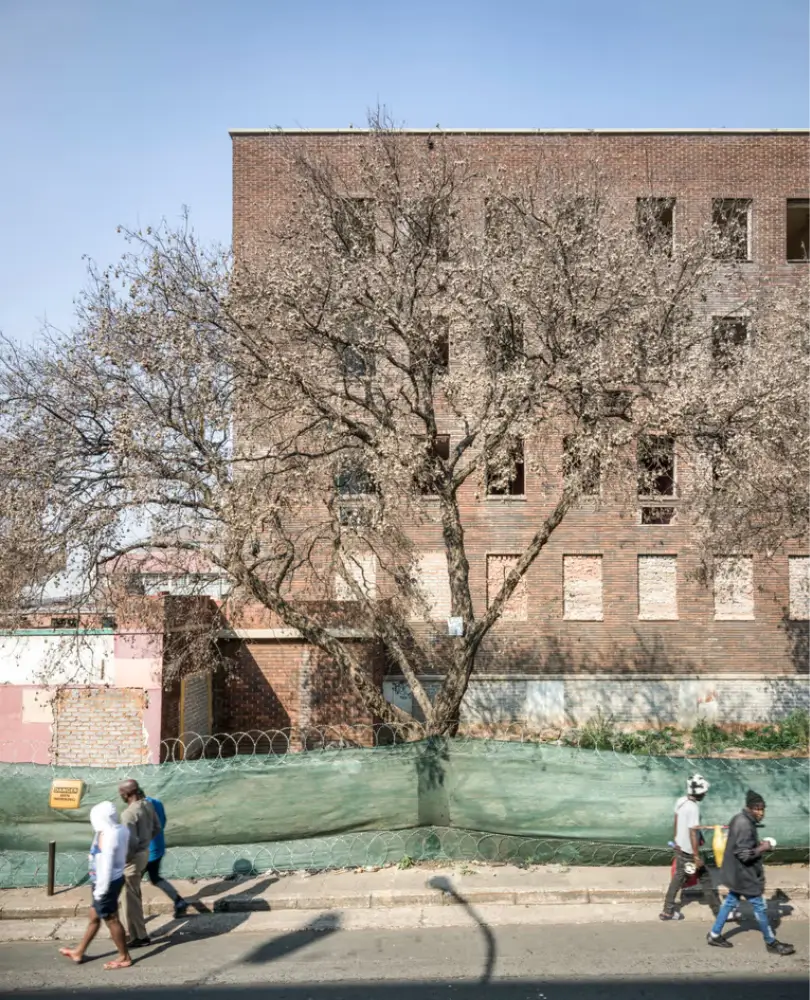
The exhibition also looks directly at some of Johannesburg’s most difficult histories. In 80 Albert Street (2026), Subotzky photographs the facade of the building that once housed a notorious apartheid-era pass office and later became a shelter for unhoused women. In 2023, 77 people died there in one of South Africa’s deadliest urban fires. The work places segregation, migration, neglect and displacement within the same physical structure, showing how different eras can remain present in a single site.
There are gentler images too. An empty swimming pool in an abandoned garden, for example, shifts from a scene of decline into something more reflective through Subotzky’s association with T. S. Eliot’s Burnt Norton. These moments prevent the exhibition from becoming a simple catalogue of Johannesburg’s problems.
A Johannesburg Landscape shows how difficult it is to reduce Johannesburg to a single story. Subotzky moves between personal memory, family history, architecture, mining, migration, vegetation and urban change, allowing the city’s contradictions and overlapping histories to remain visible rather than resolving them into one neat account.