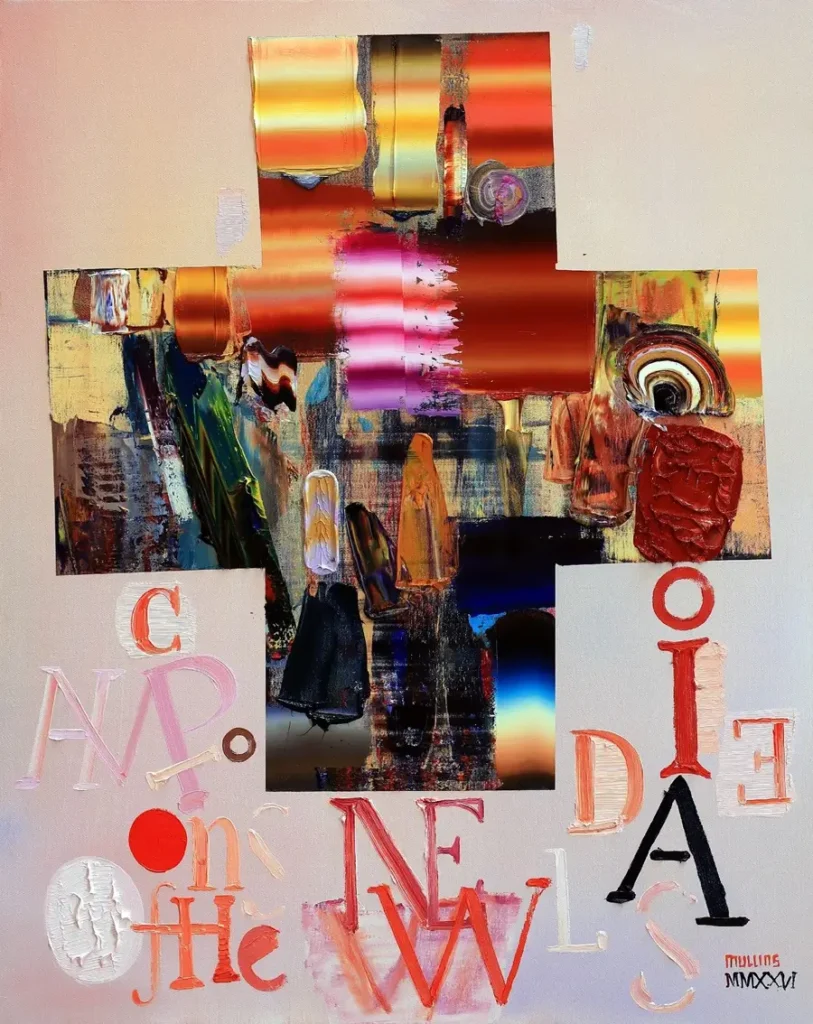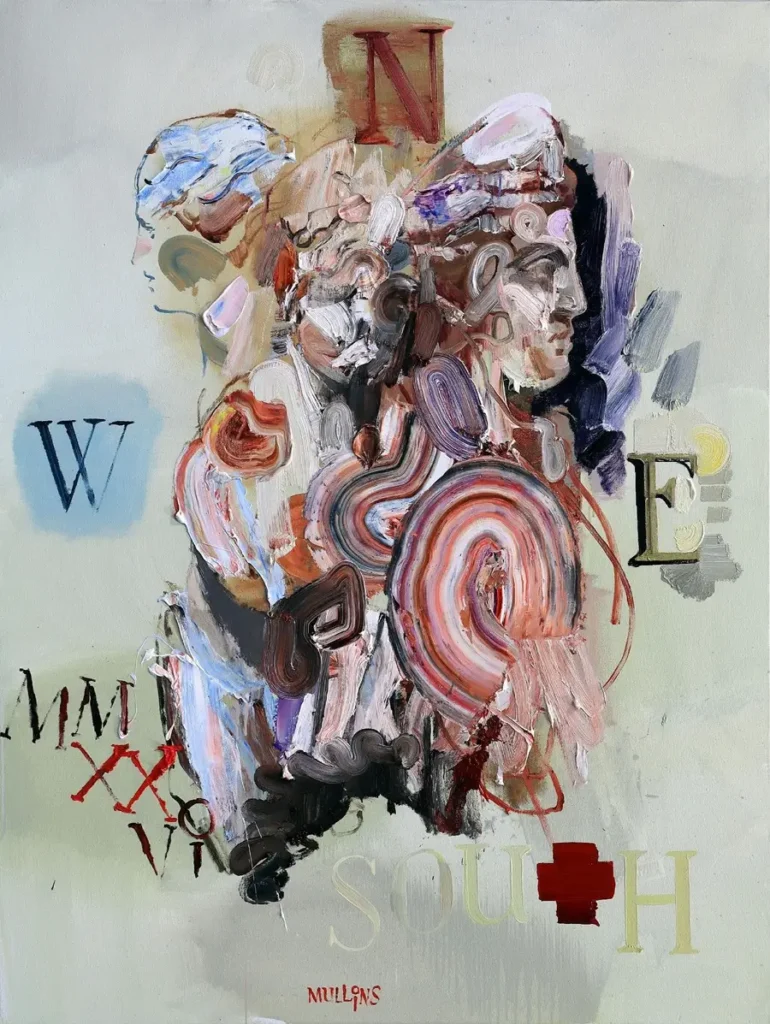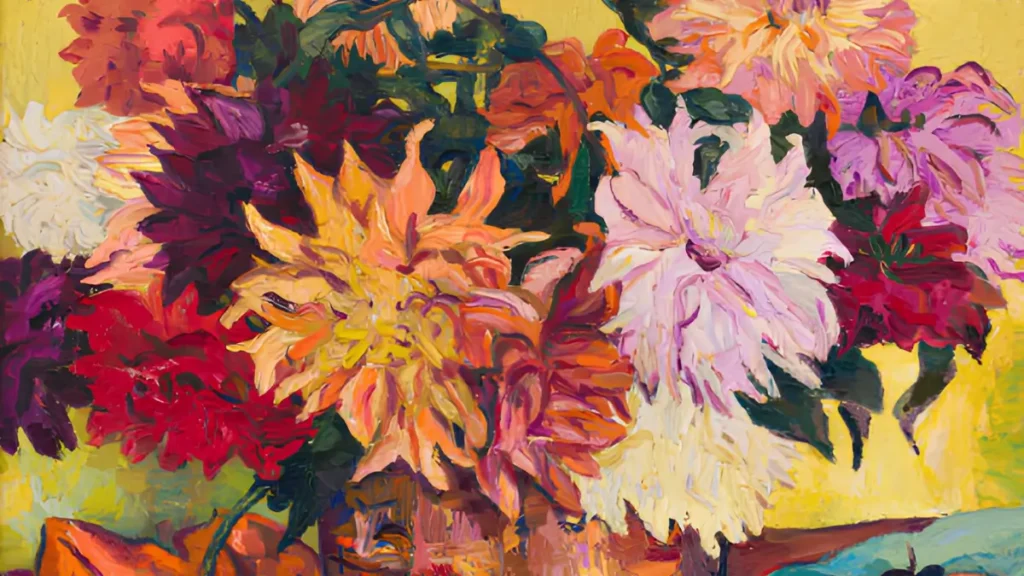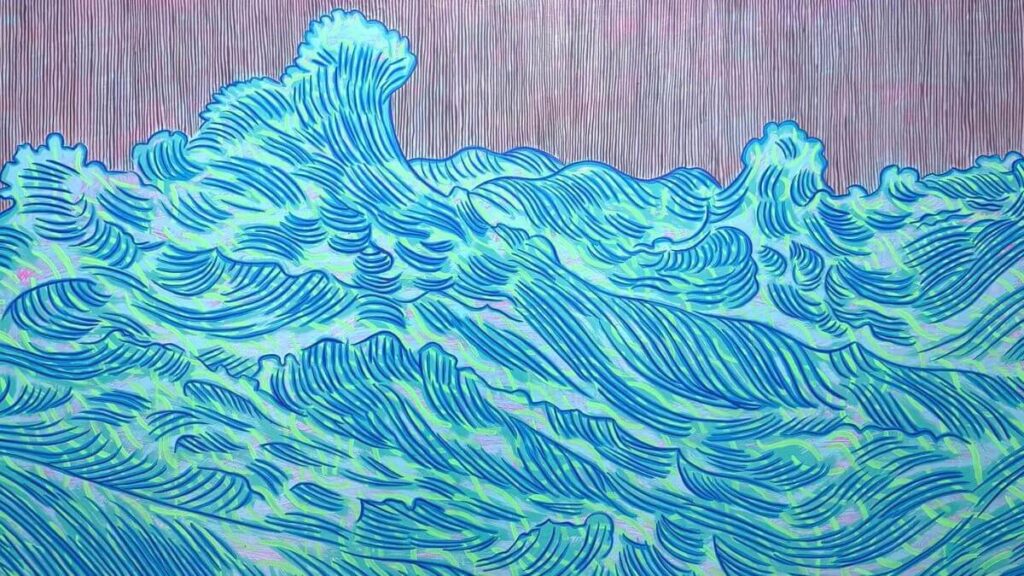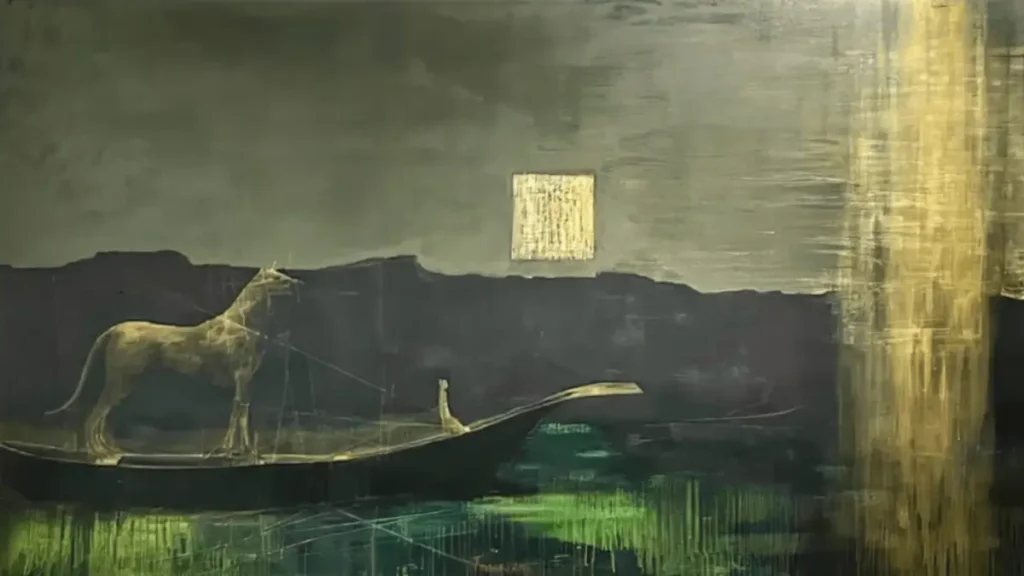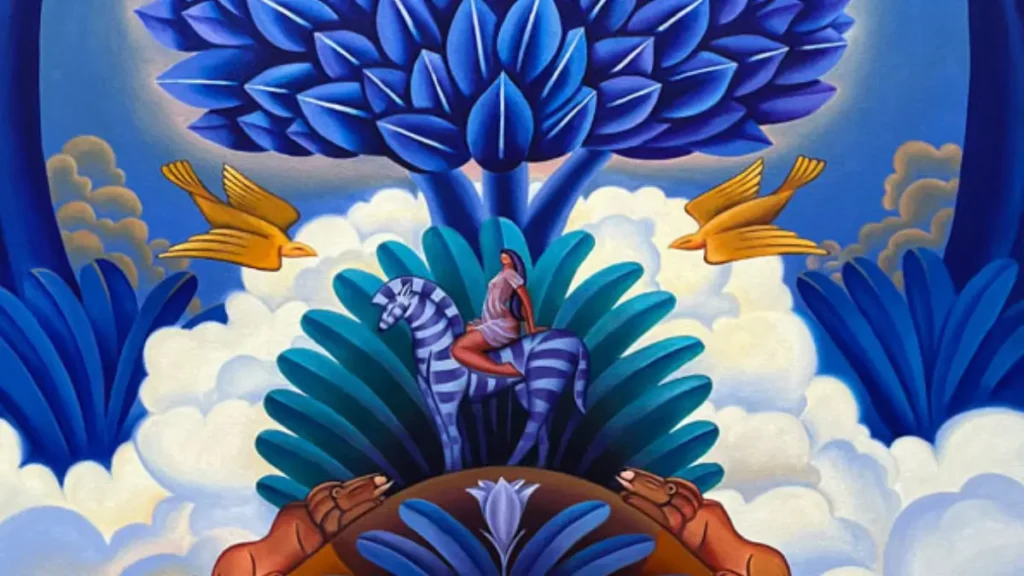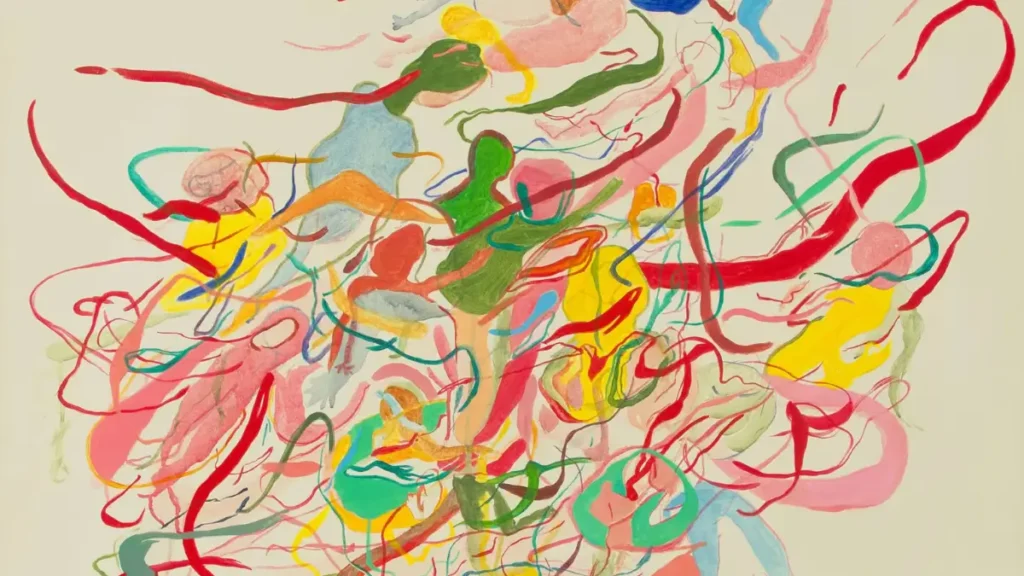
In Manifesto, Nigel Mullins turns his attention to art itself: its history, its big ideas and the ways artists have tried to make sense of the world around them.
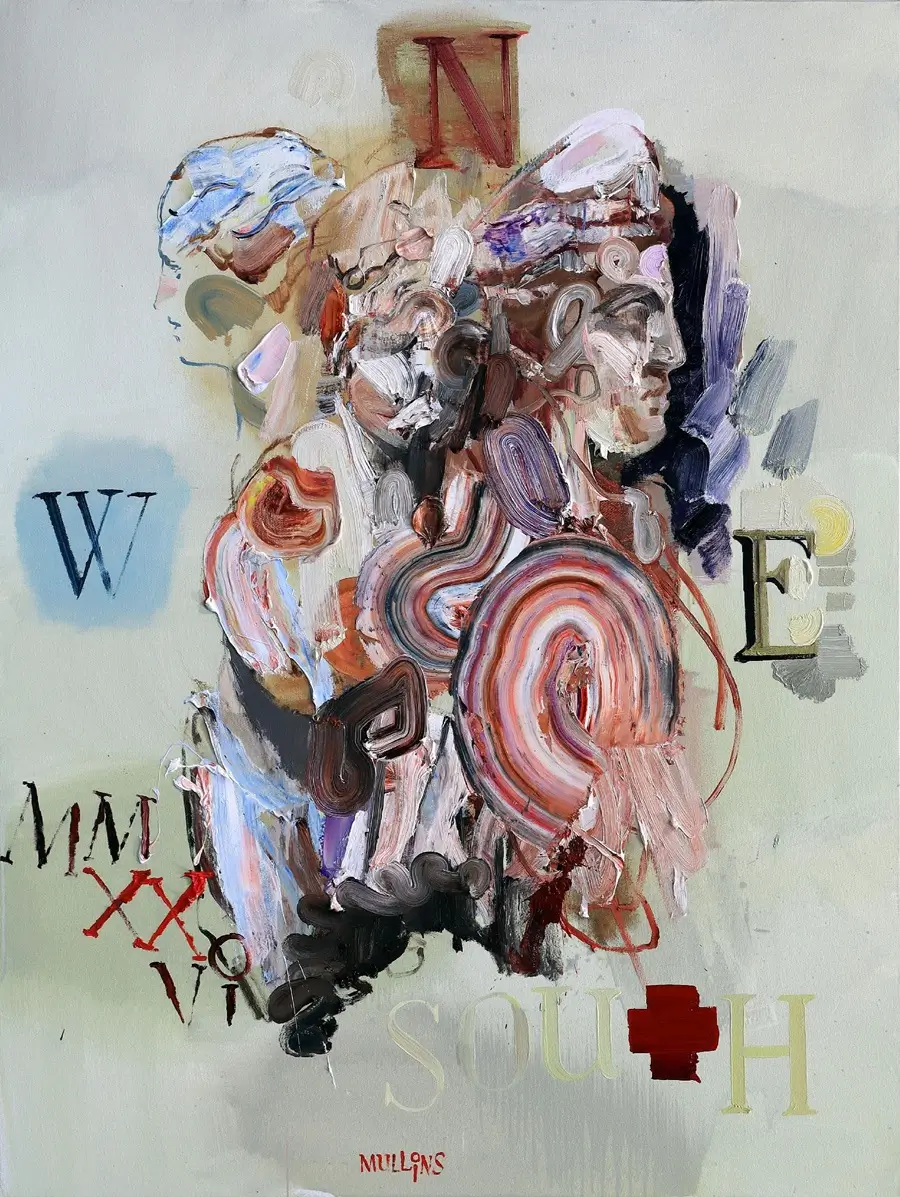
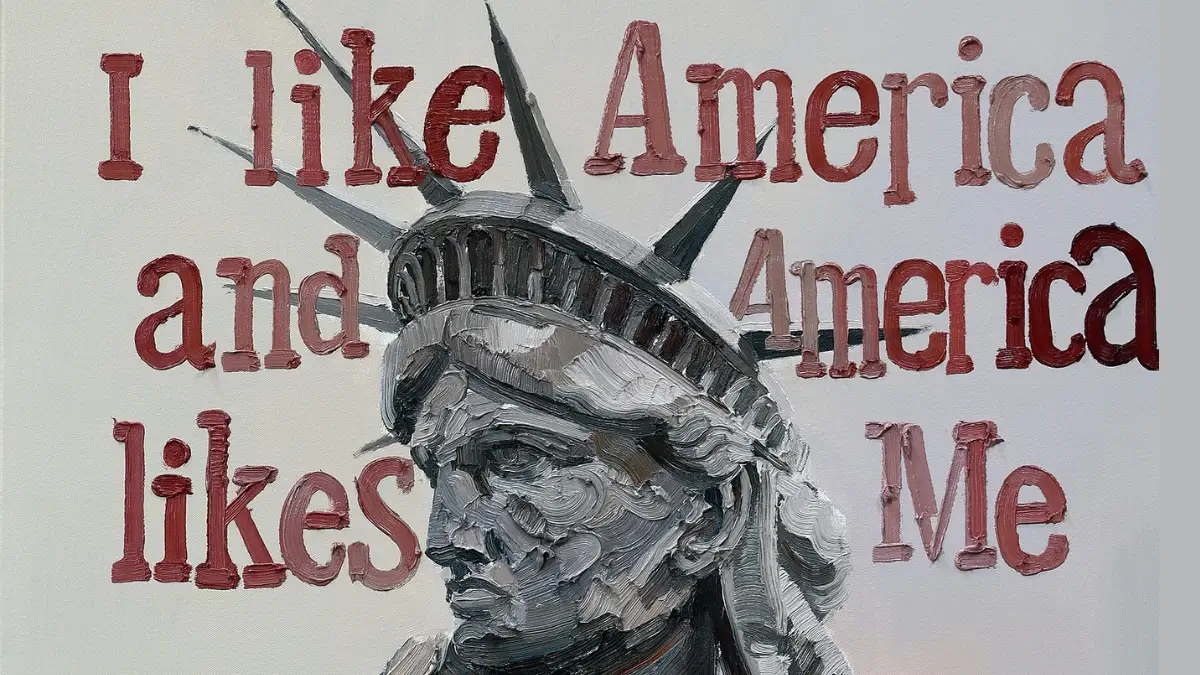
Known for thick, heavily worked surfaces that move between recognisable imagery and abstraction, Mullins draws on the manifestos, visual language and thinking of artists and movements from the 20th century to the present. References range from Joseph Beuys and Cindy Sherman to Ai Weiwei, but Mullins is less interested in quoting art history than in entering into conversation with it. Fragments of slogans, ideas and borrowed references are worked into paintings and works on paper, becoming part of his own unruly manifesto.
There is also a strong sense of time running through the exhibition. Mullins imagines people in the year 2226 standing in front of these works and wondering what our present moment was like. What would we want to tell them? What might they make of our politics, anxieties, beliefs and repeated mistakes?
This idea connects with Mullins’ longstanding interest in superstition, ritual, icons and talismans. He sees historic art manifestos in a similar way: as attempts to shape the future through words, conviction and collective belief. Their optimism interests him, even when the world that followed did not live up to their promises.
Some works operate almost like messages placed into a bottle for a future audience. Others look backwards, considering how art objects survive changing values, political movements and acts of destruction or protest. Across the exhibition, past, present and imagined future overlap.
In Manifesto, Mullins starts with art history and turns that lens towards the present, asking what the art being made now might one day reveal about the people, values and ideas that shaped it.