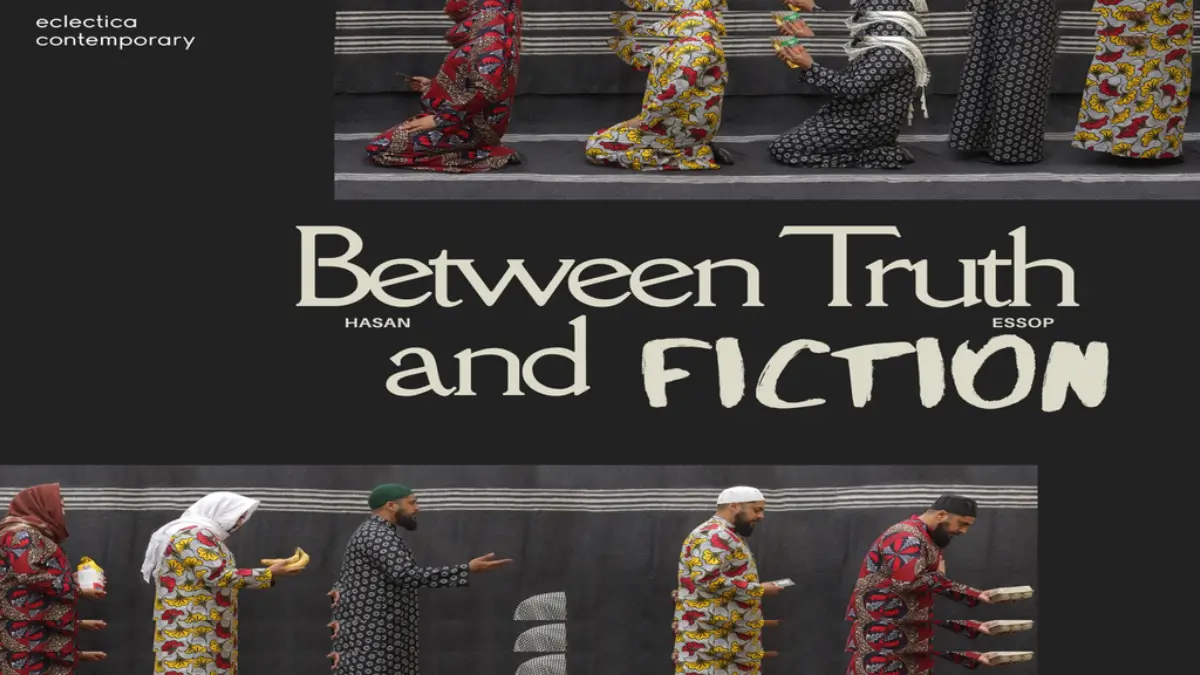
Between Truth and Fiction signals a new phase in Hasan Essop’s practice. After almost two decades of working collaboratively with his twin brother, Essop returns alone to the visual language they developed through performance, photography and digital collage.
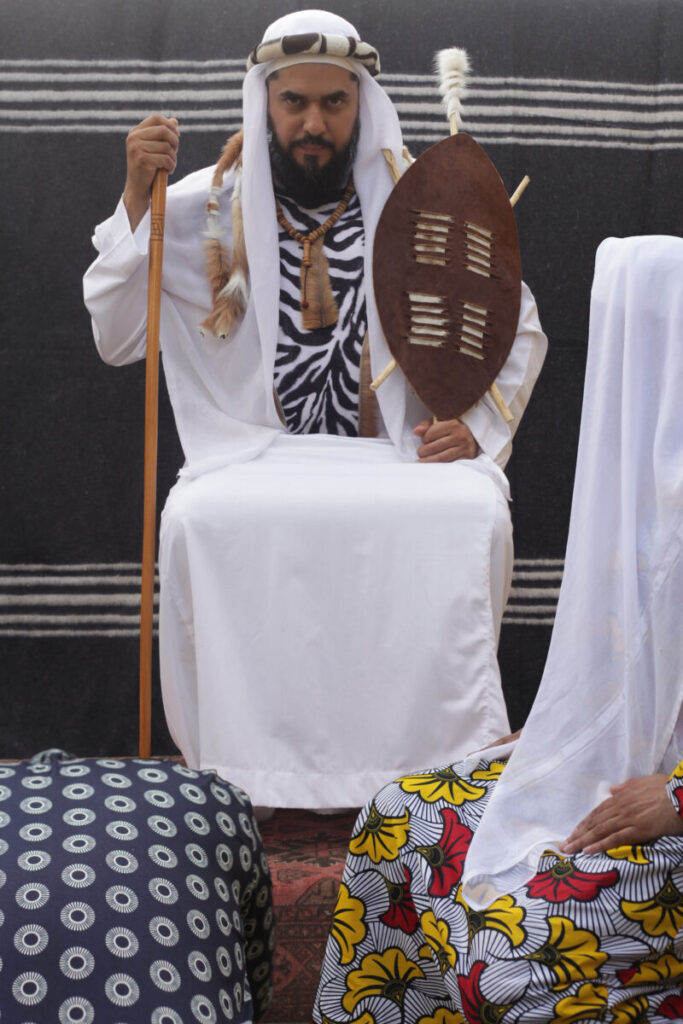
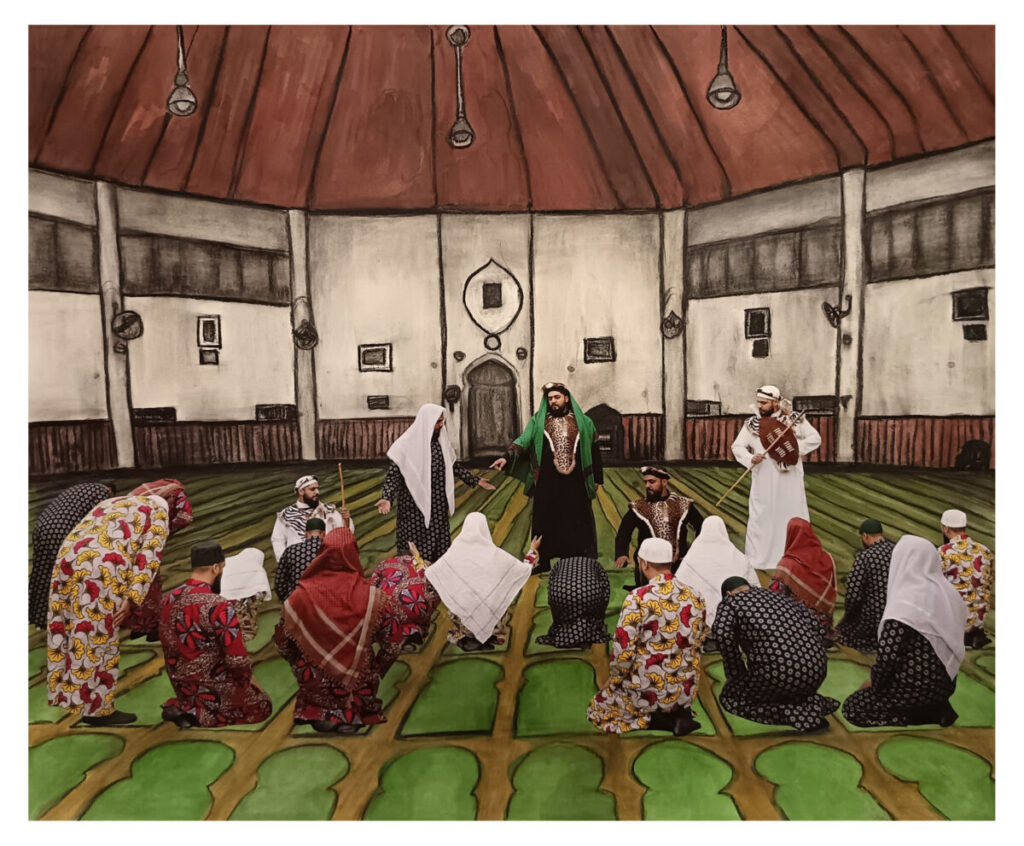
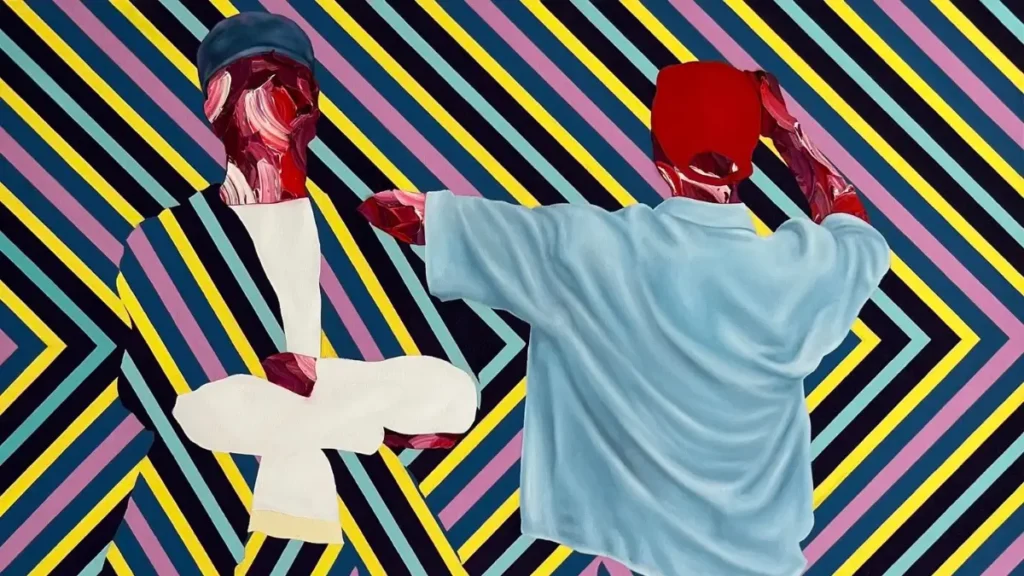
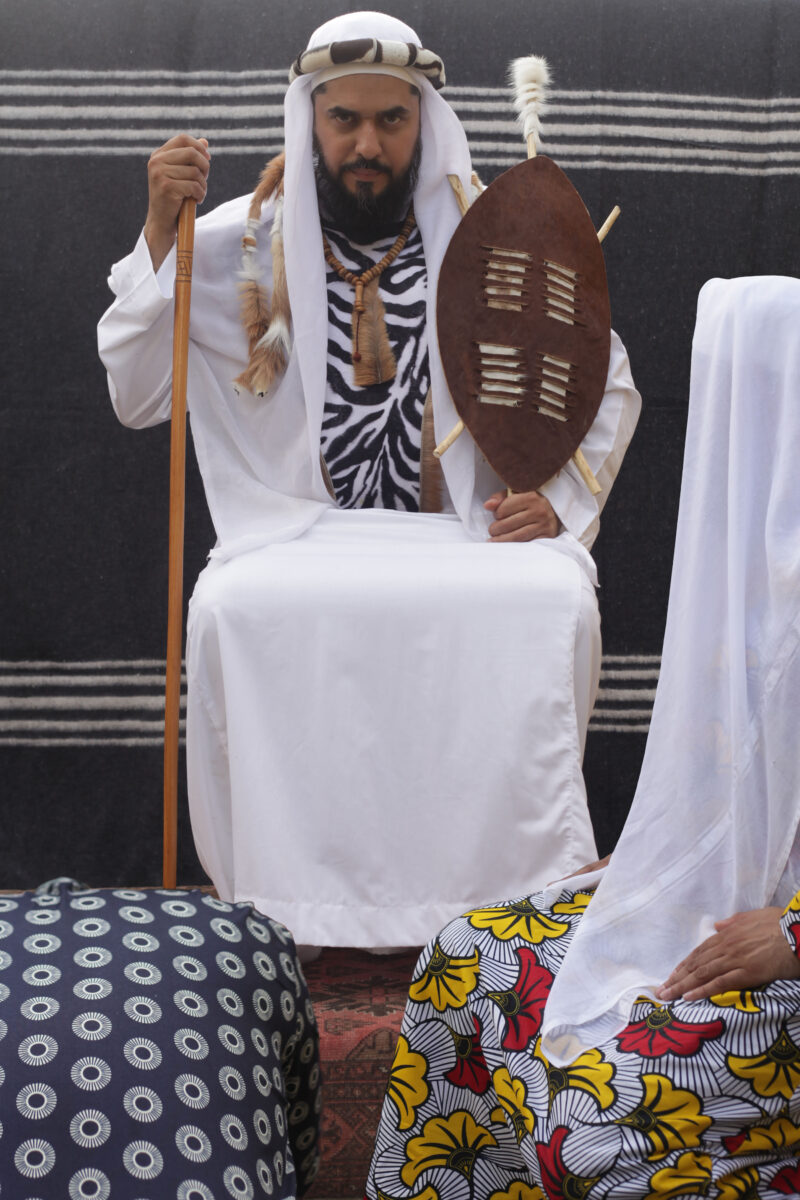
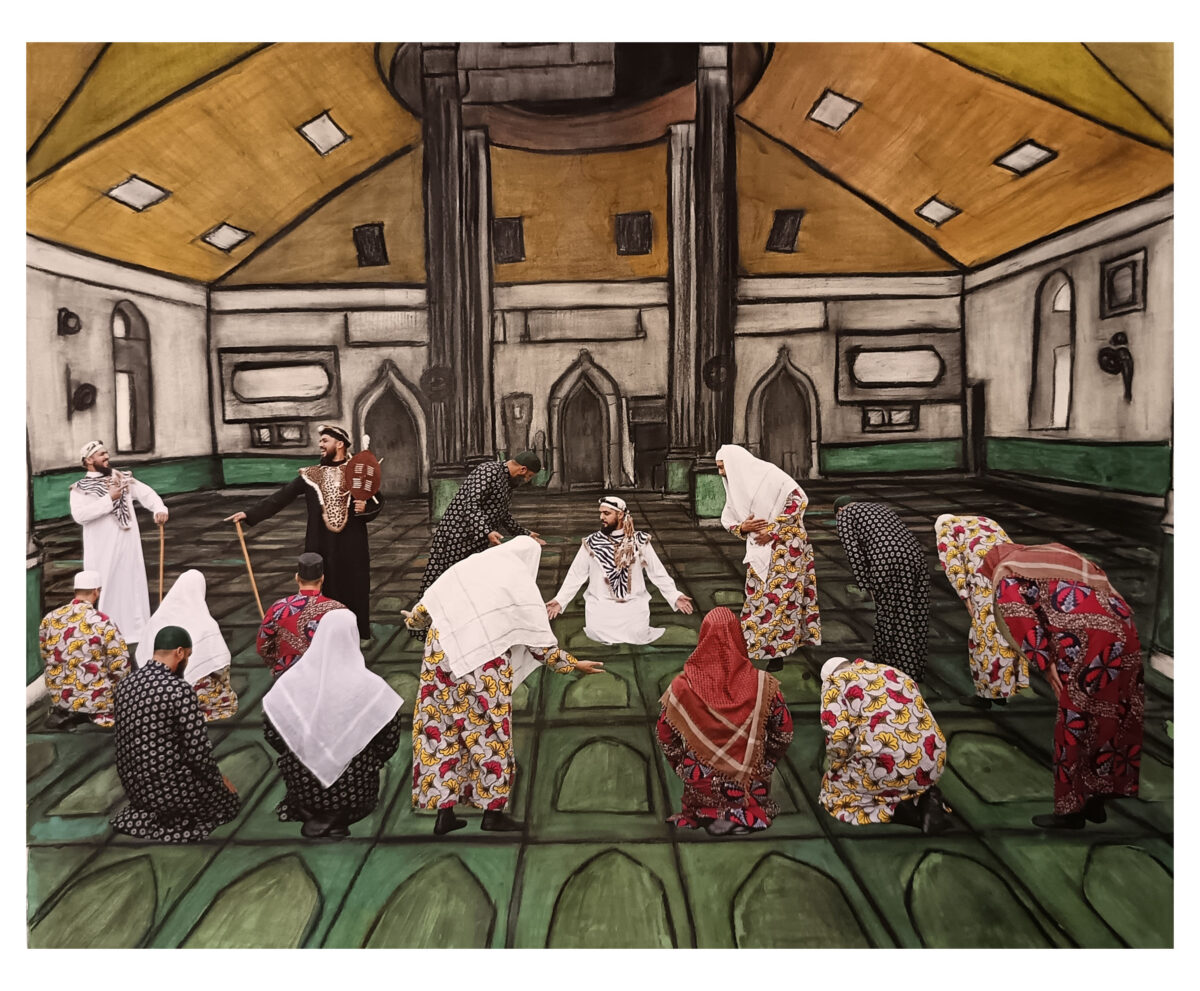
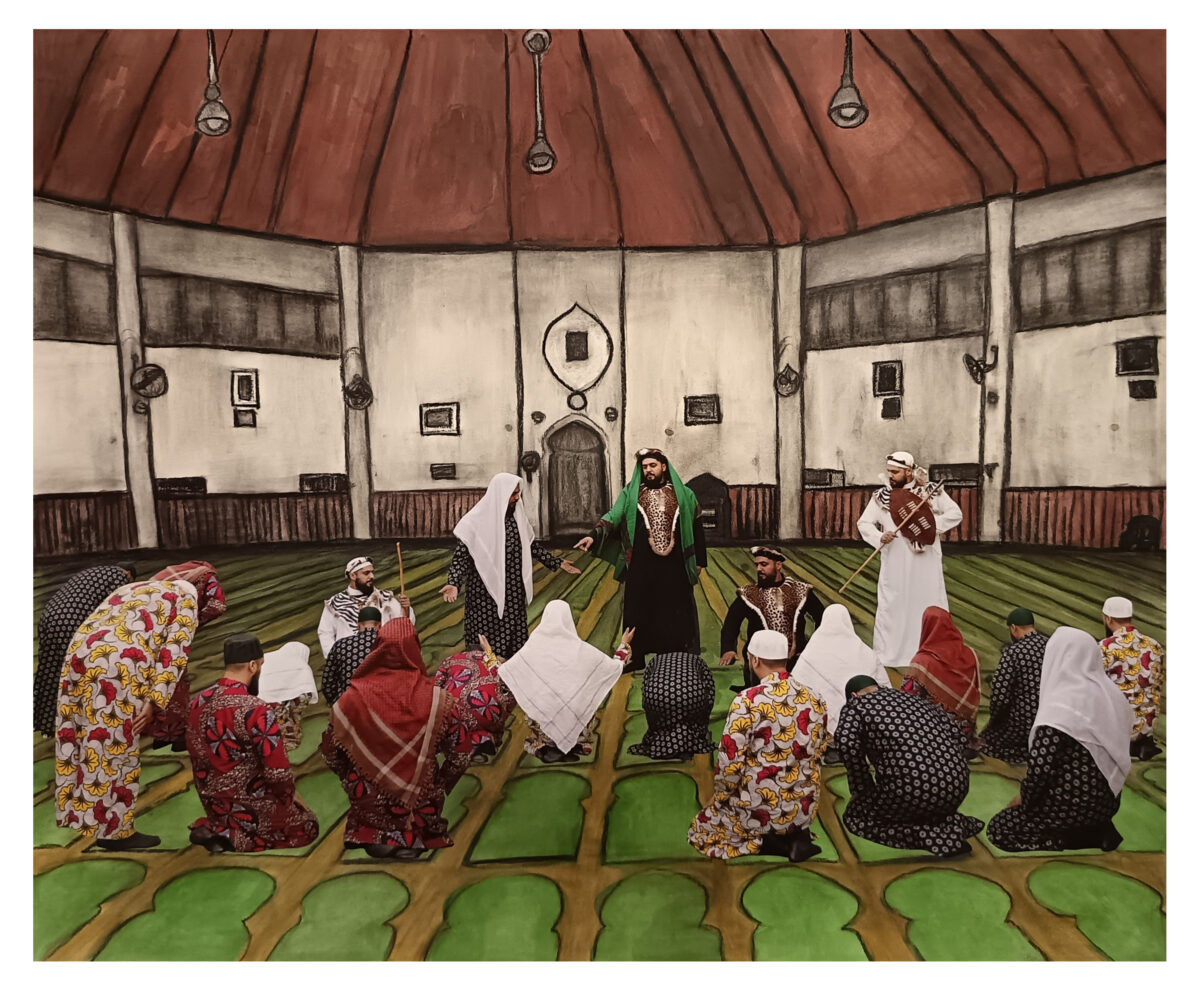
Essop performs every figure in these carefully staged scenes. Costume, gesture and props are photographed separately and assembled into layered compositions. Drawn and painted marks interrupt the photographic surface, while incomplete perspectives and visible construction lines reveal how each image has been made.
This emphasis on process feels particularly relevant at a time when artificial intelligence can produce convincing images with no physical event behind them. Essop keeps the evidence of human labour in view: the body that performed, the hand that drew and the decisions that shaped the final composition.
Clothing becomes another form of collage. Islamic garments, African textiles, contemporary objects and symbols of authority carry different histories into the same image. These combinations reflect Essop’s own experience of identity as African, Muslim, Indian and South African. Faith, culture and ancestry remain distinct strands within a life formed through their continual overlap.
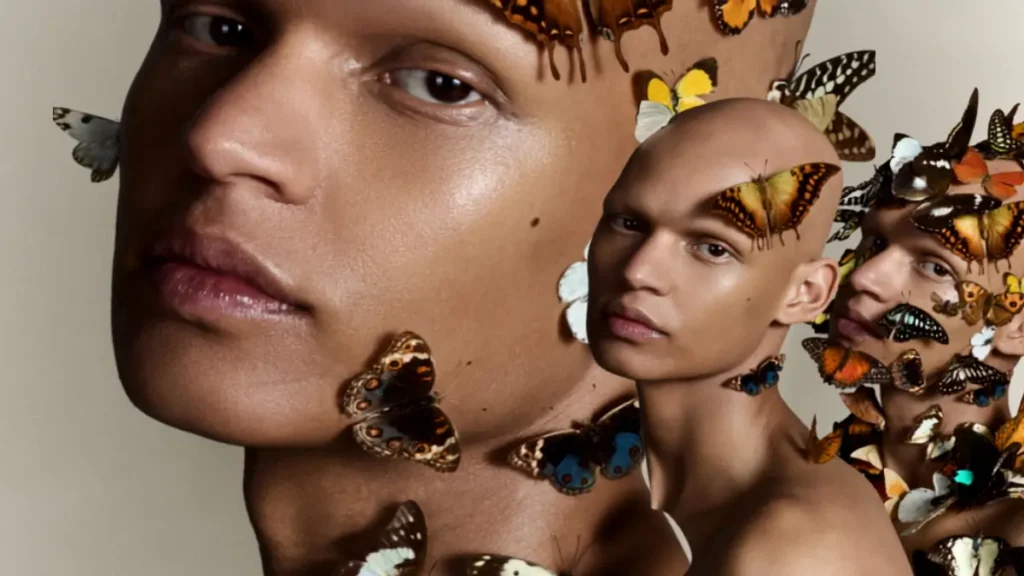
The repeated figure has long been central to Essop’s work. In this exhibition, one body occupies every role, appearing as a congregation, community, leader, follower, traveller and imagined historical character. Repetition allows a single person to hold several identities at once and suggests the many roles people learn to perform as they move through different social spaces.
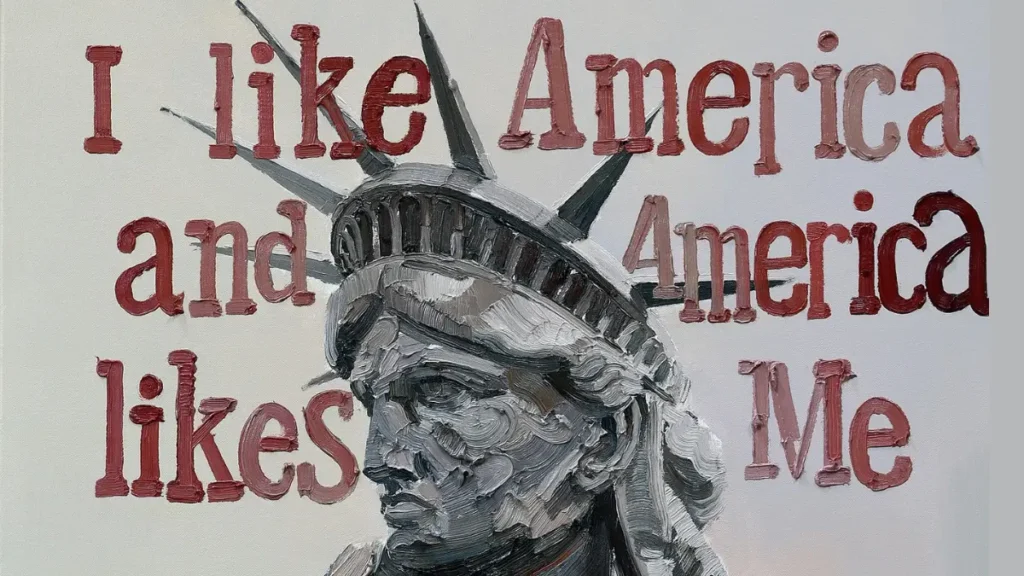
Questions of belonging become more pronounced in scenes where figures wait, kneel or carry documents, groceries and personal possessions. These ordinary gestures evoke migration, bureaucracy and the need to be recognised. They also connect the work to South Africa’s contested ideas of nationality and citizenship, and to the visible markers through which people are too often judged as belonging or excluded.
Mosque interiors provide a recurring setting. Qur’an 49:13, with its emphasis on human difference as a basis for mutual recognition, gives the work an ethical point of reference. Essop stages the tension between this principle and the divisions created through race, ethnicity, nationality and ancestry.
In the collaged drawings, architecture becomes theatrical and memory begins to reshape the photographic scene. Religious ceremony, social experience and imagined histories occupy the same unstable space. Through these constructed encounters, Between Truth and Fiction considers how images influence belief and how identity is continually learned, performed and revised.