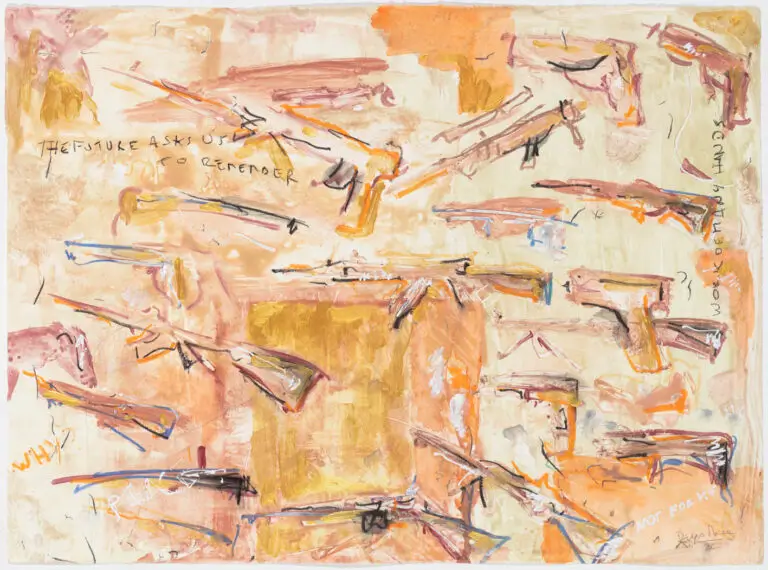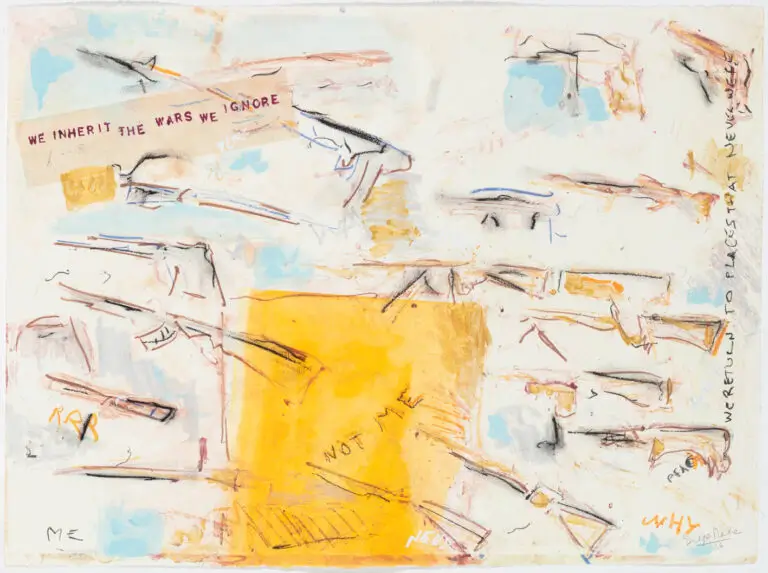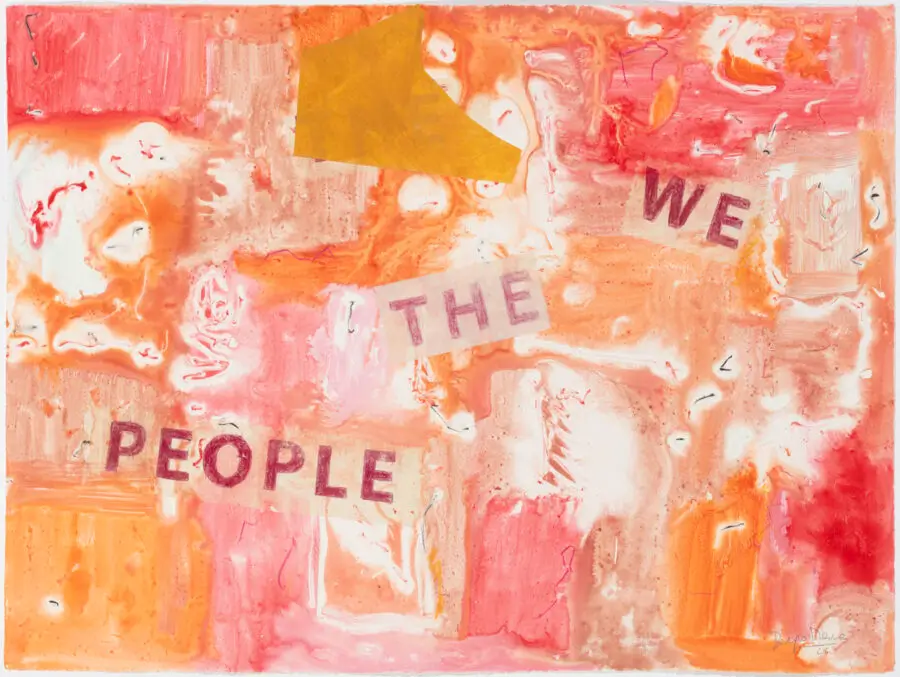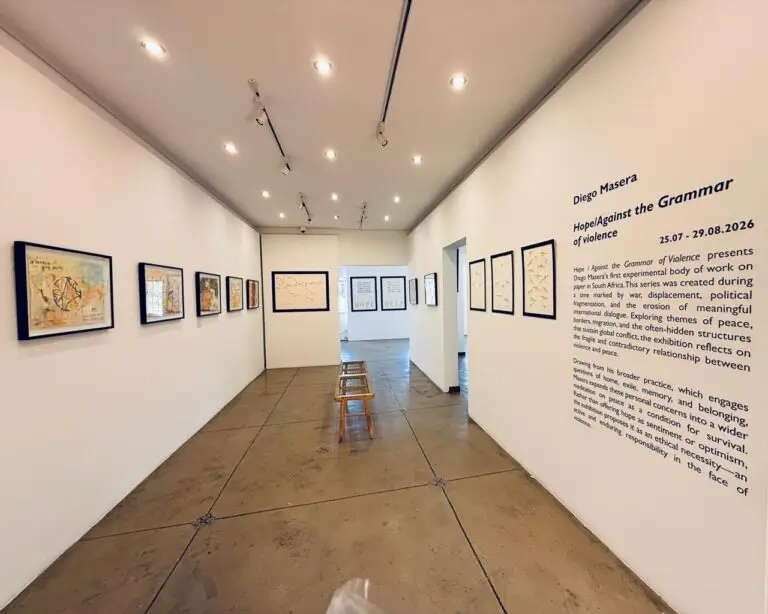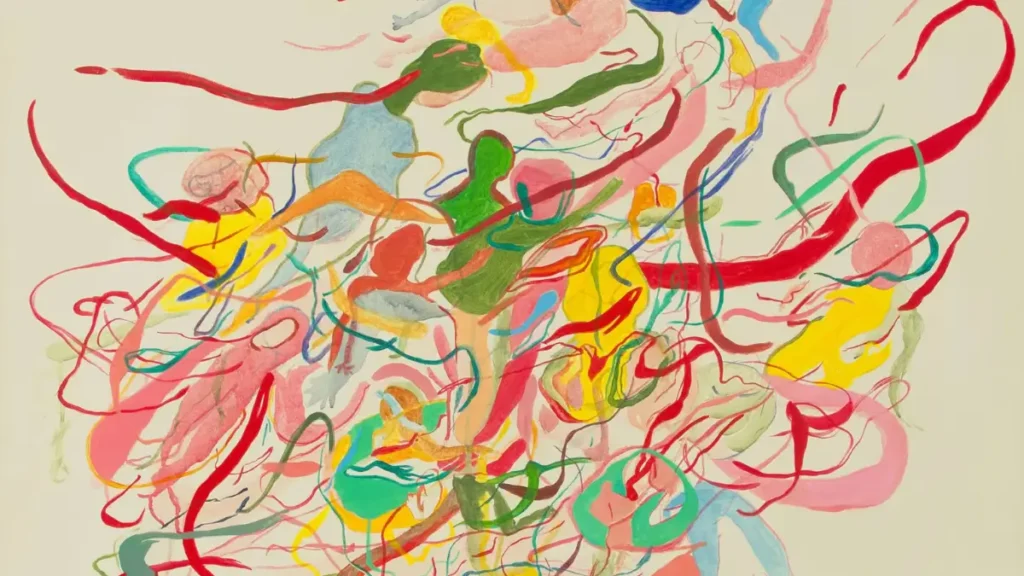
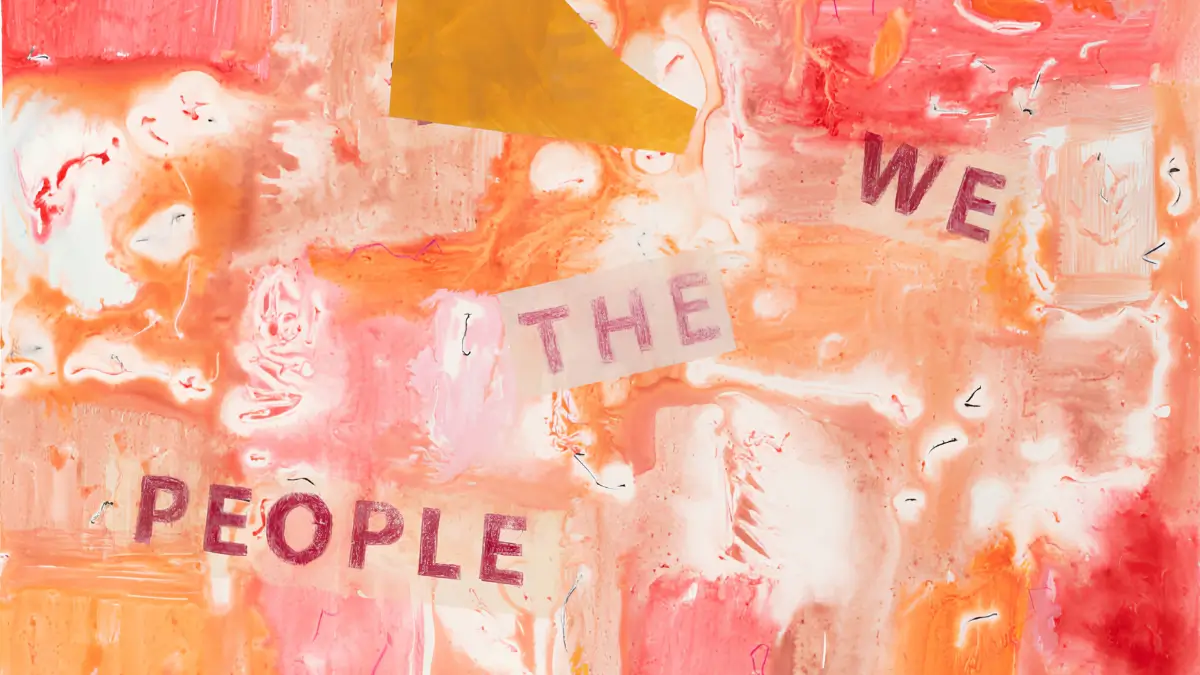
In HOPE / Against the Grammar of Violence, Diego Masera looks at what the idea of peace means at a time shaped by war, displacement and political division. The exhibition is his first solo presentation with David Krut Arts in Johannesburg and includes works on paper, video and a new body of prints made with the David Krut Workshop.
Masera comes to art from an unusual background. A former diplomat, he has worked in international development, environmental policy and with communities affected by inequality and climate change. That experience feeds directly into his work. Rather than treating political language as enough in itself, he uses images, materials and data to address experiences that are often difficult to contain within official or institutional language.
For this exhibition, Masera worked with Roxy Kaczmarek at the David Krut Workshop at Arts on Main to produce his first experimental body of work on paper. The works deal with peace, borders, migration and the systems that sit behind global conflict. Maps, statistics and images of movement appear alongside more direct interventions into paper.
One of the central works spells the word PEACE through bullet holes in a large sheet of paper. The word can only be read from the reverse. It is a deliberately uncomfortable image: peace becomes visible through the evidence of violence used to make it. A video records the process, extending the work beyond the finished object and drawing attention to the contradiction at its centre.
Elsewhere, images of migrating birds refer to movement across borders and disrupted airspace during war. Maps trace routes associated with migration and the circulation of weapons, connecting individual movement to larger political and economic systems.
Masera also returns to questions of home, exile, memory and belonging. These ideas are not treated separately from conflict. Instead, they become part of a wider argument about the conditions people need in order to live, move and belong.
HOPE / Against the Grammar of Violence does not present hope as simple optimism. Masera treats it as something that has to be maintained and acted upon, particularly when the language of peace is being pushed aside by violence and political division.